Dongzhi · Winter Solstice
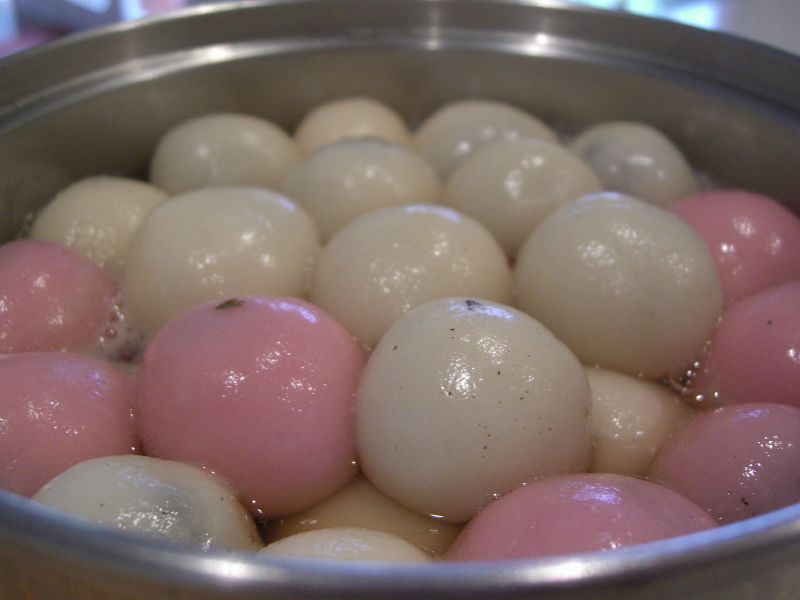
The winter solstice in China's time: tangyuan in the south, dumplings in the north. The traditional Chinese calendar divides a year into 24 solar terms. Dōngzhì, Tōji, Dongji, Tunji (in Okinawan), or Đông chí (in Vietnamese) is the 22nd solar term, and marks the winter solstice. The term begins when the Sun reaches the celestial longitude of 270° and ends when it reaches the longitude of 285°. In common usage, Dongzhi more often refers to the particular day when the Sun is exactly at the celestial longitude of 270°. In the Gregorian calendar, it usually begins around 21 December (22 December East Asia time) and ends around 5 January. Along with equinoxes, solstices (traditional Chinese: 至點; simplified Chinese: 至日; lit. 'extreme day') mark the middle of Traditional Chinese calendar seasons. Thus, in "冬至", the Chinese character "至" means "extreme", which implies "solstices", and therefore the term for the winter solstice directly signifies the summit of winter, as "midwinter" is used in English. The Dongzhi Festival or Winter Solstice Festival is a traditional Chinese festival celebrated during the solar term. The origins of this festival can be traced back to the yin and yang philosophy of balance and harmony in the cosmos. After this celebration, it is believed that days will have longer daylight hours and therefore create an increase in positive energy flowing in. The philosophical significance of this is symbolized by the I Ching hexagram fu (Chinese: 復, "Returning"). Also, it is the day with the shortest daylight, and longest night. Wiki link Dates computed on the Chinese calendar from the Sun and Moon, in each country's own time. Text: Wikipedia (CC BY-SA).