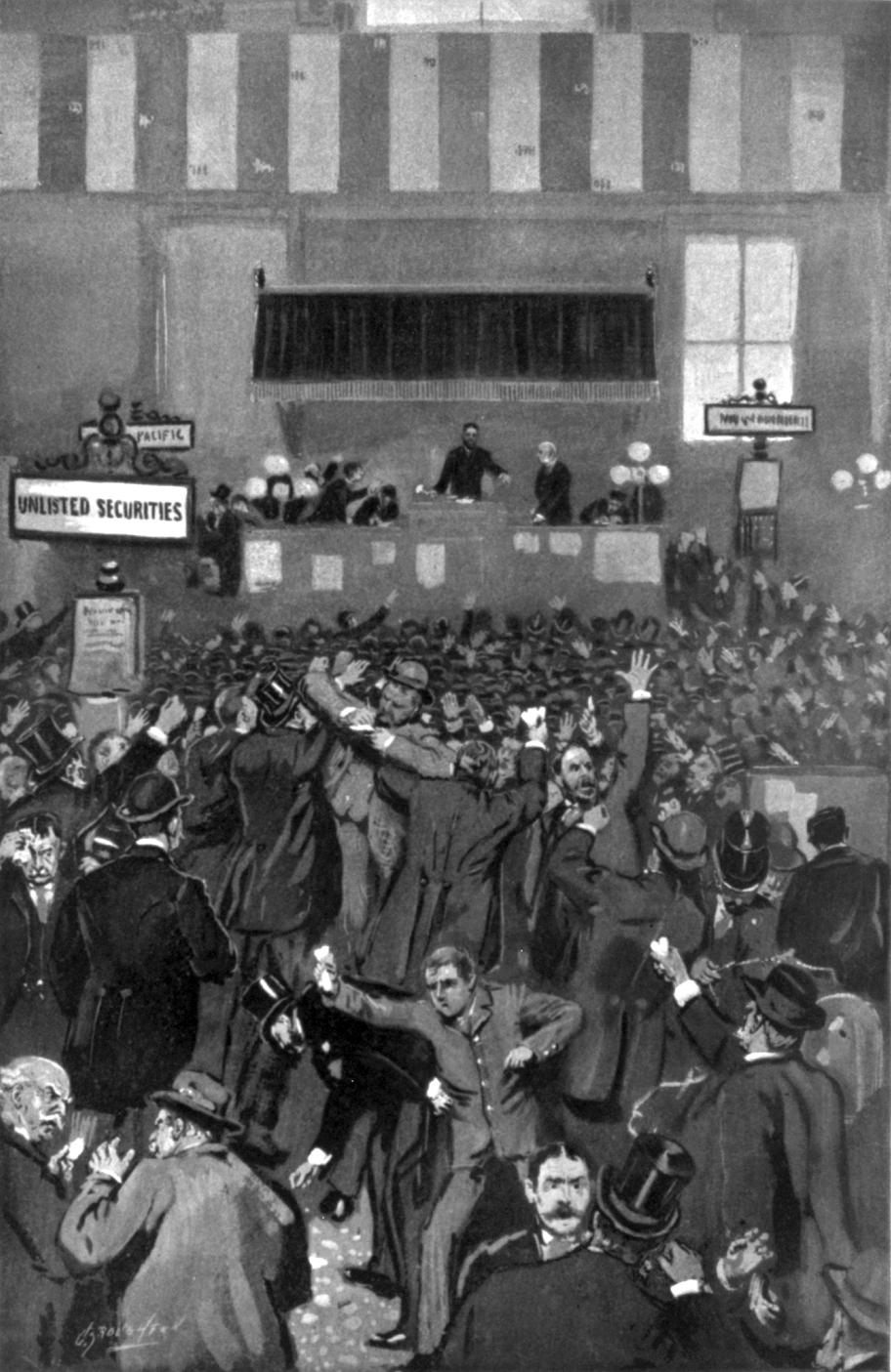
Panic of 1893
The Panic of 1893 was an economic depression in the United States. It began in February 1893 and officially ended eight months later. The Panic of 1896 followed. It was the most serious economic depression in American history until the Great Depression of the 1930s. The Panic of 1893 deeply affected every sector of the economy and produced political upheaval that led to a political realignment and the presidency of William McKinley. January 1893 – June 1894 · 1 year 5 months Business activity: −37.3% The failure of the United States Reading Railroad and withdrawal of European investment led to a stock market and banking collapse: this Panic was also precipitated in part by a run on the gold supply. The Treasury had to issue bonds to purchase enough gold. Profits, investment and income all fell, leading to political instability, the height of the U.S. populist movement and the Free Silver movement. Estimates on unemployment vary, it may have peaked anywhere from 8.2 to 18.4%. Dates: the National Bureau of Economic Research's business cycle chronology. Wiki link Wiki link